If you’re spending a decent amount of time in the saddle and looking to improve, then making sure your bike fit is correct is one of the best investments you can make. Between clubmates, riders at the coffee stop and strangers on the internet, it all ends up a bit of a melting pot of advice and it’s hard to know whether you’re doing the right thing. Visiting a good bike fitter with the right equipment (like us!) is the best way to navigate the rumours and achieve your optimum position.
A good fit is about comfort and efficiency. A comfortable rider is a fast rider: you can put down more power, more of the time. If you’re a budding racer seeking the absolute pinnacle of your performance, then even slight discomfort is a distraction you don’t need and every watt saved is a watt earned. And for those of us not in the peloton, we want comfort and efficiency to give us more energy and headspace to simply enjoy the ride! Most important of all, however, is injury prevention. Discomfort, even low level, will prompt your body to compensate. Over time, this can cause bad habits or even an injury to develop. In fact, the most common reason for someone booking in for a fit is to fix an issue with pain or injury. I think we can all agree it would be best to avoid the injury in the first place, and start with a bike fit!
The Process
We begin with an assessment of your riding history and your body. We need to know about any previous injuries, any pain that you come across during your riding, and also what you’re hoping to achieve with your riding in the future. We need to examine your flexibility, measure your foot alignment, and check whether custom footbeds may be needed.
Starting Position
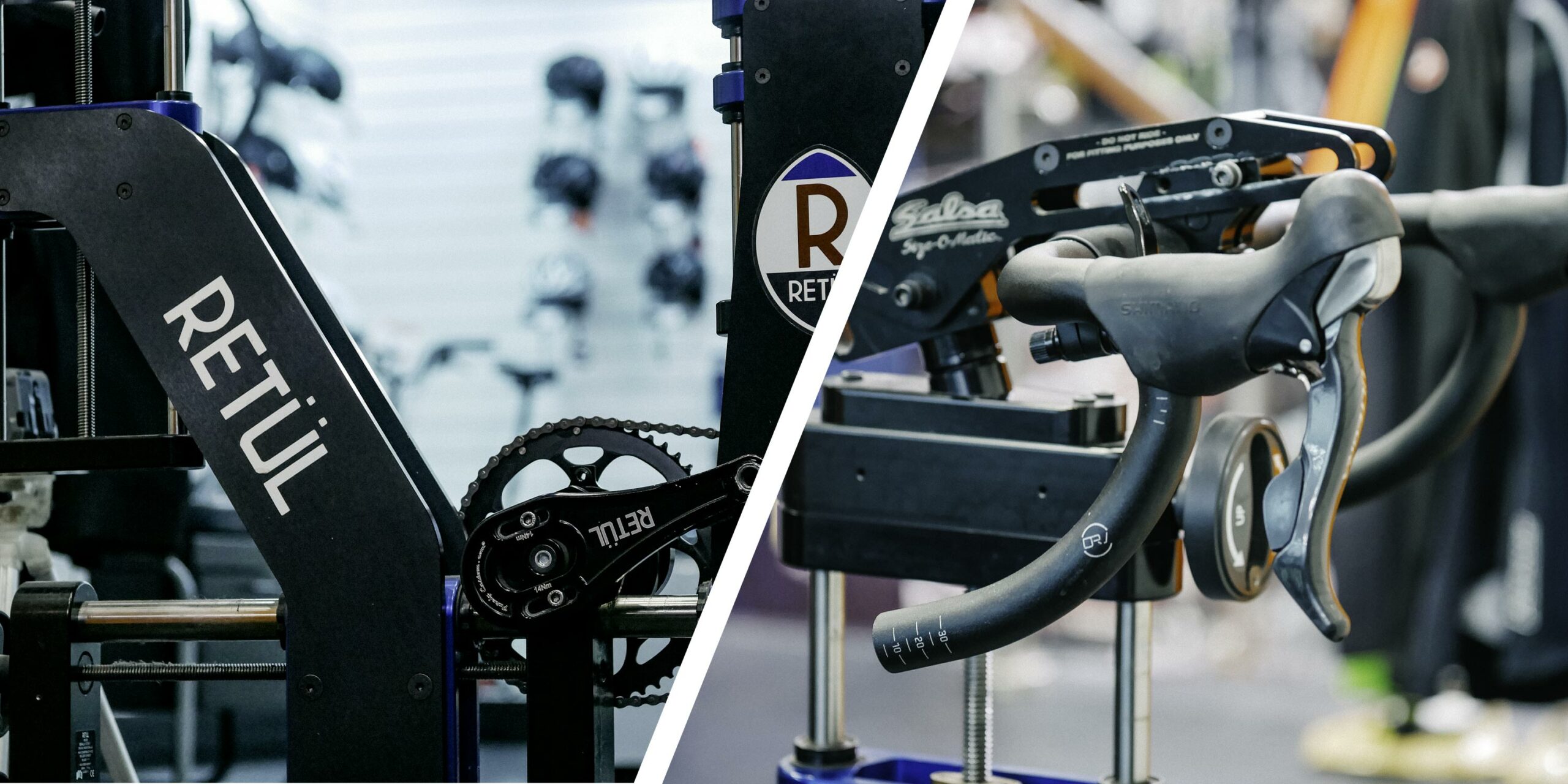
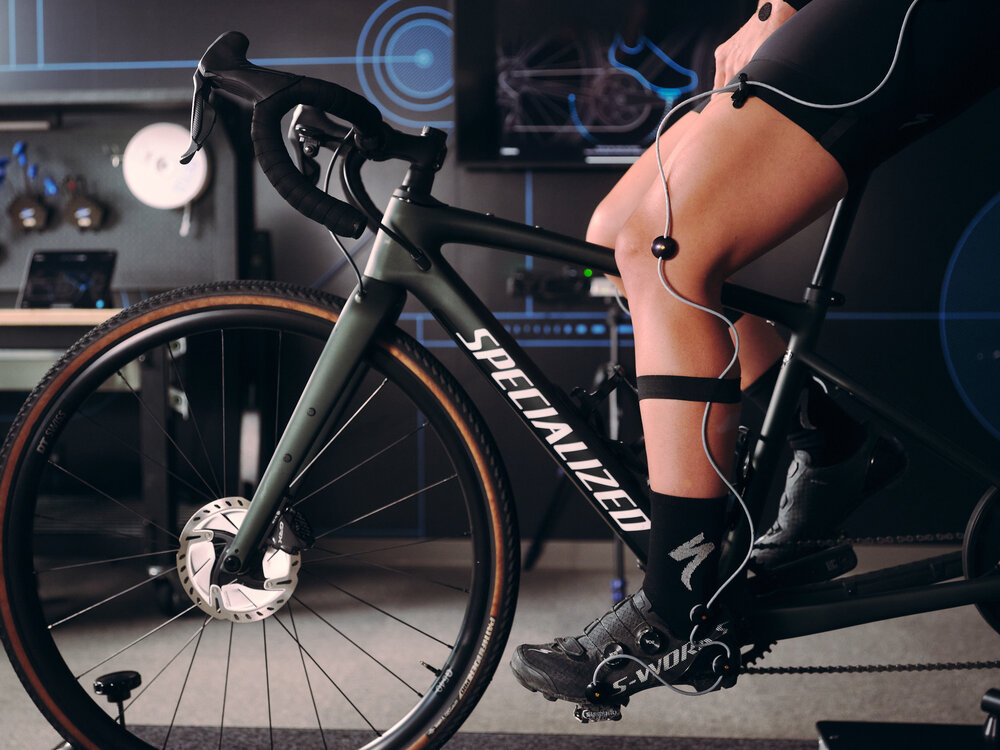
To find our ‘before’ image, we set the Retul fitting jig to your current setup. Then, with you sat on the machine, markers are placed in 8 positions for the Retul system to track. This means we can measure real-time data as you pedal. The basic setup here will be different for riders on road bikes versus time trial or triathlon bikes, as the geometry of these bikes differs too.
Assessment
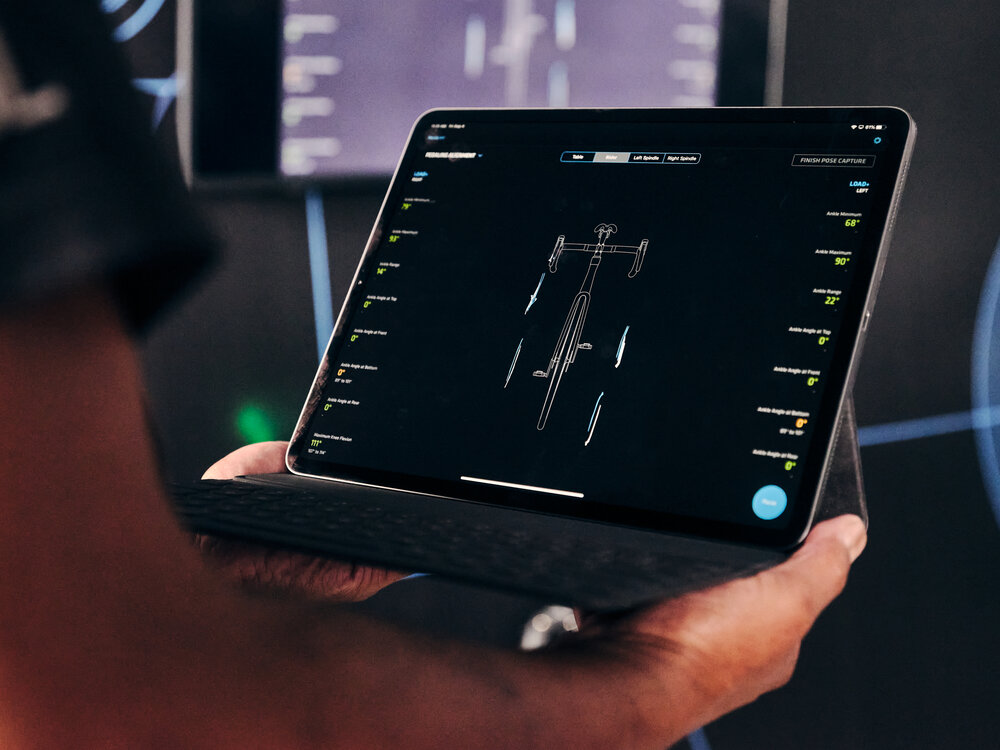
All this data is gathered up by the Retul software for assessment by our fitter. The degree of accuracy here is much higher than can be perceived by the naked eye, but after thousands and thousands of pedal strokes, these are the increments that really matter! The fitter will then adjust the fitting jig based on your results, and you’re back on the machine for another batch of data.
Fit Report
Once your fit is truly dialled in, we produce a report of key measurements for your bike. We can help you apply this to the bike you’re currently riding, but it can also be used on a bike you haven’t bought yet. If needed, we’re also equipped to give you a full geometry report for a custom frame builder.
Custom Contact
The clever tools aren’t limited to the bike department – we have one for your feet as well! All your pedalling power goes through your feet, so it’s vital to ensure that this connection with the bike is as stable and supported as possible. The Retul footbed machine takes accurate molds of your feet, which we then use to turn a ‘blank’ footbed into a replica of this mold for a bespoke level of support in your cycling shoes.
Likewise, we have a device for measuring your sit bone width, in order to advise on the most comfortable saddle. Many stock bikes (or so our bike fit data would suggest) come fitted with a saddle that’s too narrow for its new rider. The right size and shape saddle will properly support your sit bones, allowing you to drive against that support and put the power into the pedals.
What Next?
Now it’s time to ride your bike with a new level of comfort and efficiency. It’s important that you spend time in your new position soon, because after a few weeks we offer a free adjustment session. Bodies aren’t static, and once yours has responded to the adjustments we’ve made, those adjustments might not be spot on anymore! So the post-fit adjustment really is important, to ensure you get the most out of your bike fit experience.
Lastly, it’s important to remember that as your riding habits change, as your flexibility changes, your bike fit will also change. The report will not be accurate forever, and it is well worth revisiting this process every few years.