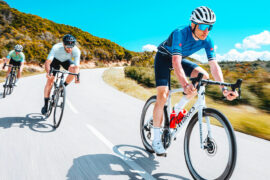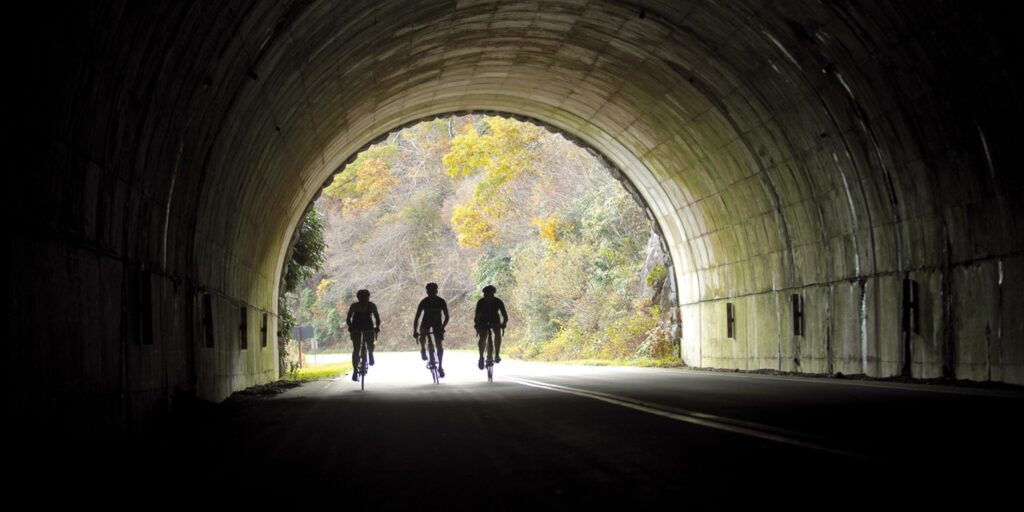
As cyclists and athletes, we’re spoilt for choice when it comes to pushing our limits. On the road however, these can more or less be categorised into going faster, or going further. Both have their merits but, with the longer days and (broadly) more favourable conditions, in the summer we find ourselves leaning more towards the latter option.
Going for distance introduces a whole bunch of benefits beyond simply getting stronger on the bike. Two-wheeled travel offers the perfect pace to take in the countryside, slow enough to enjoy the view but quick enough to get you far from home (and back) in a reasonable time frame. That said, getting out further from home does bring in a few concerns, curveballs and anxieties – so here are a few tips to help you ratchet up the mileage this summer.
Route Planning
- Aim to spread the climbing out throughout the route (as much as is possible, given London’s flatness!). This makes it easier to pace your effort throughout the ride. Plus the last thing you want at the halfway point, if you’re feeling tired, is the prospect of all your climbing to come!
- Plot feed stops at regular intervals. While it’s still worth carrying plenty of snacks with you, taking the opportunity to pause and stretch is also helpful when heading into uncharted territory.
- Use route planning apps like Komoot and Strava to pick up on other riders’ tips. Komoot is pretty much built around user-generated ‘highlights’ which can be filtered by sport (including different types of cycling). This is an excellent way to discover quiet lanes away from heavy traffic, or top coffee stops. Strava’s ‘Heat Map’ function works in a similar way, but colour codes areas based on the amount of riders that pass through.
- Put the ‘train’ intro training: take a look at potential bail-out points with a train station that can bring you close to home. Also, grabbing a train out of London to begin the ride can be great for morale. You skip the less pleasant parts of escaping the city in the first instance, and then you’re headed for home the whole way along your route.
Fuelling
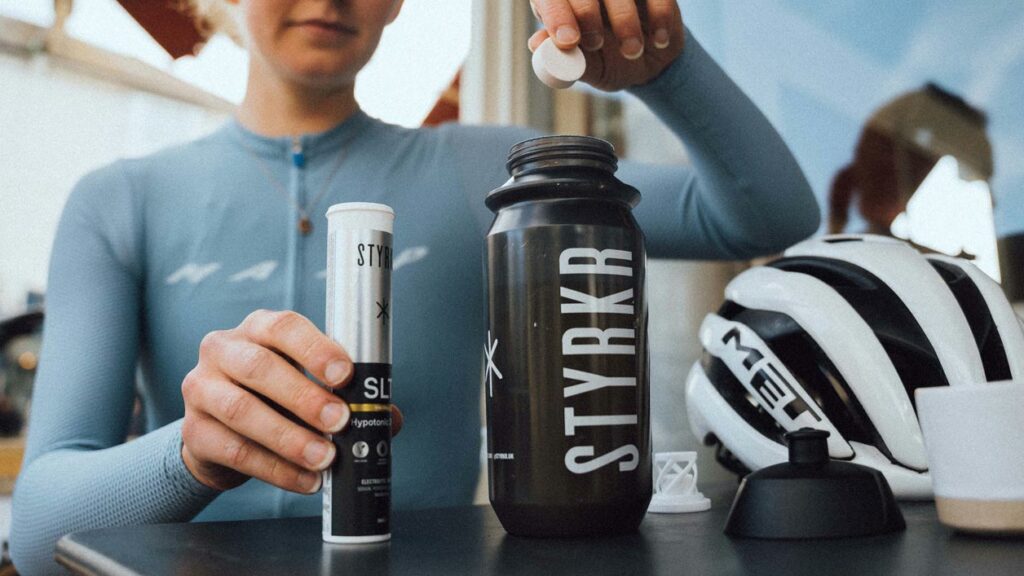
Proper fuelling for a longer-than-usual ride starts the night before, and continues throughout your activity. There’s an excellent, in-depth piece from our friends at Styrkr here, but here’s the key info.
- Make sure you have a decent evening meal including plenty of slow-release complex carbs and some protein. Don’t eat to close to bedtime to ensure you have the best chance of a good night’s sleep.
- With your body’s reserves well-stocked, once you’re out and riding you should only need to keep things topped up with easily-digestible calories. Keep eating, constantly. Little and often is the best technique, and ideally you will never feel actively hungry. 50g of carbs per hour is a good benchmark (handily available within one bar, care of Styrkr).
- Keep on top of water too, again little and often. You should be getting through a bottle every hour or so, more if it’s particularly warm out. Using electrolytes will help to stave off cramp (as well as making the water from that tap round the back of a petrol station a little more palatable!).
Kit/Equipment
Longer saddle time means more risk of the conditions changing, or suffering a mechanical, while you’re out and far from civilisation.
- Packable layers are super useful. You may not need them, but if you do you’ll be glad you brought them along.
- Knee and arm warmers roll up very compactly, and will quickly convert your bibs and short-sleeved jersey into a set of knicks and a long-sleeve.
- A windproof packable jacket will often have enough of a water repellent coating to keep the worst of a sudden downpour off, but primarily will stop the windchill turning a damp cyclist into a shivering and miserable one.
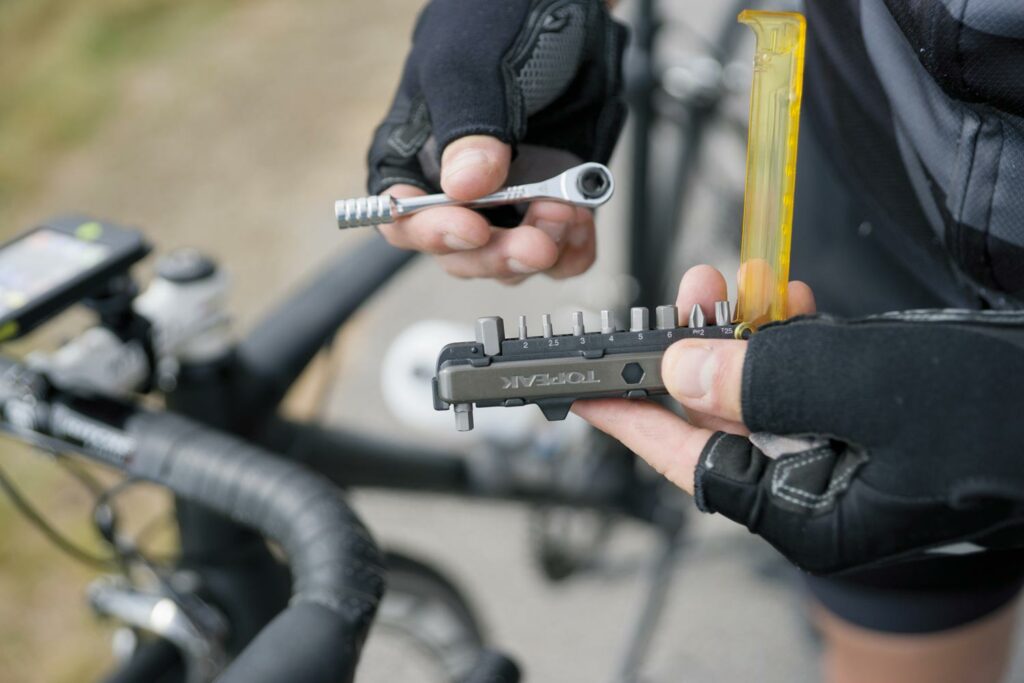
- It’s also best to be prepared for dealing with more, and larger, mechanical problems at the roadside. The taxi ride from the furthest reach of your route could be pretty expensive! It’s certainly worth carrying a chain tool, an additional spare tube, and a tyre boot or two.
- With the additional kit comes the need for additional carrying capacity: your jersey pockets might not cut it on a longer distance ride. A saddlepack or framebag can bring some extra storage space without affecting the handling of your bike or taking up space for your bidons.

If you’re short of a few pieces of kit ahead of a long-distance ride, pop along to the shop and we’ll kit you out. Until then, happy riding!